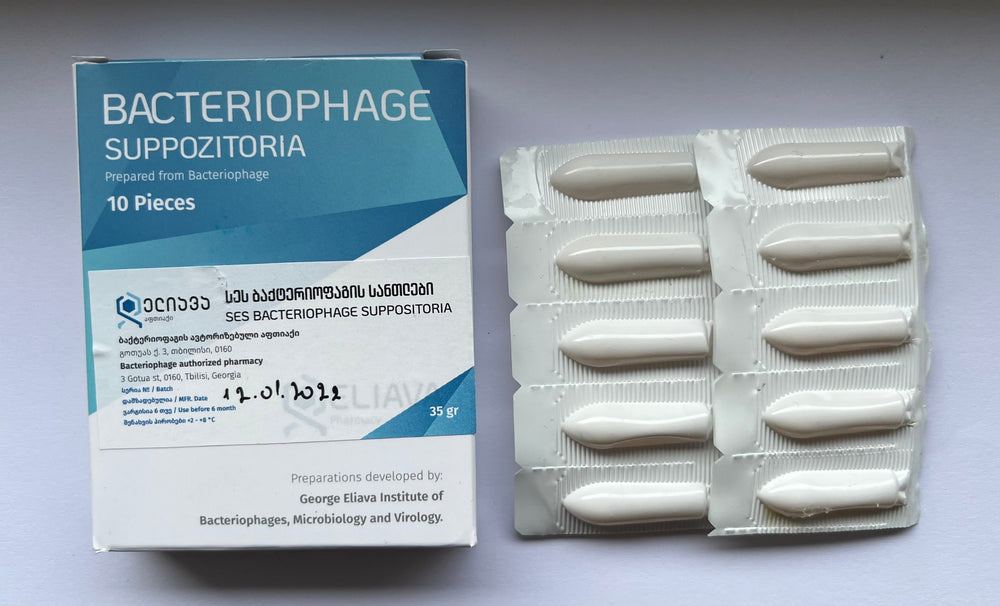

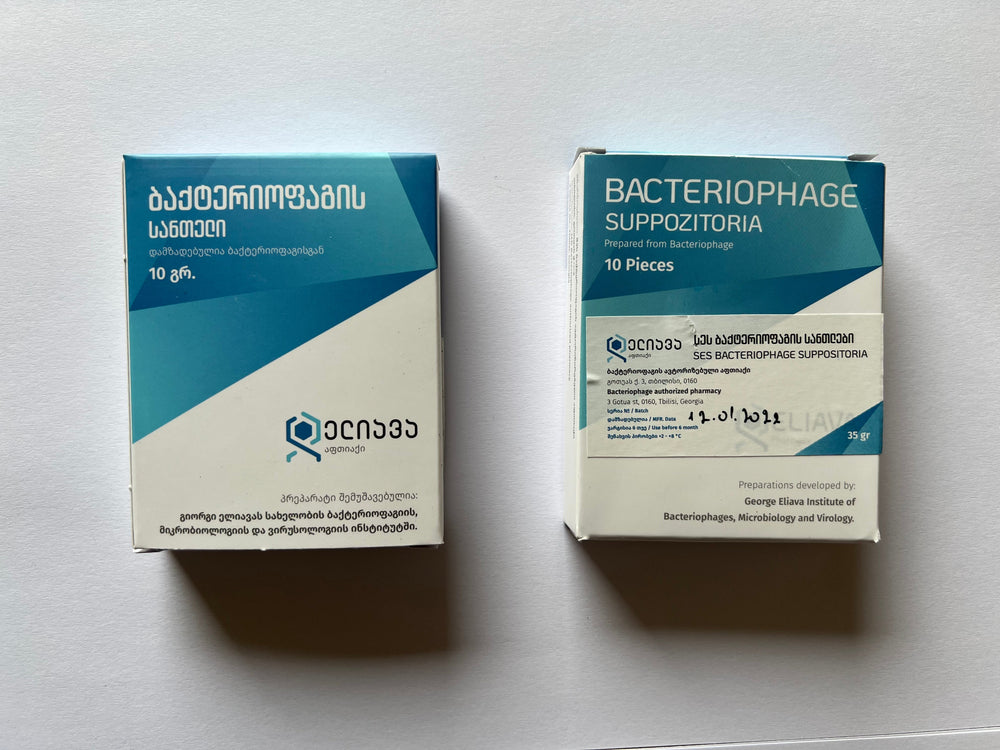

SES Bacteriophage Suppositories – 10 Pieces (35g)
SES Bacteriophage Suppositories – 10 Pieces (35g)
Convenient suppository format for multi-bacterial infections.
Effective for urogenital, gynecological, enteric, and respiratory infections.
- 10 suppositories per package (35g total)
- Lab-tested quality & standardized production
- Worldwide shipping
- Travel-friendly (refrigerate upon arrival)
- Broad-spectrum coverage — Staphylococcus, Streptococcus & E. coli
- No prescription required
Not sure whether SES bacteriophage is right for your case?
We recommend a laboratory analysis before ordering.
Start bacteriophage analysis →
Product overview (general information)
SES bacteriophage is a sterile filtrate of phage lysates specifically active against Staphylococcus, Streptococcus, and enteropathogenic E. coli bacterial strains. The suppository format provides convenient administration for urogenital, gynecological, and enteric infections, distributed without prescription.
Important notes:
- Travel-friendly, but refrigerate upon arrival
- Store a few hours in refrigerator before using
- As these products are very new, packaging may have some printing issues - please follow our instructions
Developed by: G. Eliava Institute of Bacteriophages, Microbiology and Virology
Composition & pharmacological action
Active phage components
- Staphylococcus phages: S. aureus, S. epidermidis (titer ≥ 10 ml)
- Streptococcus phages: S. pyogenes, S. sanguis, S. salivarius, S. agalactiae (titer ≥ 10 ml)
- Escherichia coli phages: Different enteropathogenic types (titer ≥ 10 ml)
Inactive ingredients
- Bacteriological growth medium
- Standard sodium saline
- Chinazolin (preservative)
Pharmacological action
SES bacteriophage leads to specific lysis of bacteria belonging to Staphylococci, Streptococci, and enteropathogenic E. coli of different serovars, providing targeted antibacterial action without affecting beneficial bacteria.
Therapeutic indications
SES bacteriophage can be used for therapeutic and prophylactic purposes in pyo-inflammatory and enteric infections caused by Staphylococcus, Streptococcus, and E. coli bacteria.
Otolaryngological diseases (ENT)
- Otitis (ear infection)
- Tonsillitis (tonsil infection)
- Laryngitis (voice box inflammation)
- Rhinitis (nasal inflammation)
- Tracheitis (windpipe inflammation)
- Bronchitis
- Pneumonia
- Pleurisy
Skin infections
- Furunculosis, carbunculosis
- Deep infiltration and abscessing sycosis
Surgical diseases
- Abscess, wound infections
- Mastitis, osteomyelitis
- Phlegmon
Oral cavity inflammation
- Stomatitis, gingivitis
Urogenital infections
- Pyelonephritis (kidney infection)
- Endometritis (uterine lining infection)
Enteric infections
- Gastroenterocolitis (stomach and intestinal inflammation)
- Cholecystitis (gallbladder inflammation)
- Staphylococcal toxic infection
- Dysbacteriosis (bacterial imbalance)
Pediatric applications
- Pyo-inflammatory disease in children (including newborns)
- Prevention of postoperative infections
- Prevention of hospital infections
Dosage & usage information (informational)
The following information is provided for general informational purposes only and reflects usage descriptions supplied by the manufacturer. Dosage and application should be determined by qualified professionals based on individual circumstances.
Quick orientation: Treatment duration is typically 3-8 days for local applications, 5-7 days for newborn treatments. Phage therapy can start only after cleaning the wound or cavity of pus.
General usage principles
- Phage therapy can start only after cleaning the wound or cavity of pus
- Store in refrigerator a few hours before using
- Travel-friendly, but refrigerate upon arrival
- Before taking the phage orally, taking 2-3% solution of baking soda is recommended
- Avoid drinking alcohol during treatment with bacteriophages
Common application routes (informational)
- Local application using phage-soaked tampons or napkins
- Cavity injection (bladder, pleural and peritoneal cavity, nasal cavity, deep wounds, abscesses, uterus, vagina)
- Enema administration
- Administration via tube and drainage
Application methods by condition (manufacturer-style informational)
Local application (wounds, lesions):
- Applied as tampon three times daily
- Treatment duration: 3-8 days
- Amount defined by size of affected area: 50-200 ml
- Only after cleaning wound or cavity of pus
Cystitis and pyelitis:
- Applied by catheter
Cholecystitis:
- 30 ml applied through tube
- Once every 2 days
Conjunctivitis:
- 2-3 drops per eye, 4-6 times daily
Newborns with pyoderma:
- Applied with napkins twice daily
- Treatment duration: 5-7 days
Unsure whether SES bacteriophage suppositories are suitable?
We recommend a prior laboratory analysis.
Quality & safety information
Contraindications
Usage of SES bacteriophage does not have contraindications.
Side effects
No side effects have been revealed during usage of SES bacteriophage.
Overdose
During the usage of SES bacteriophage, overdosing symptoms have not been revealed.
Drug interactions
Preparation can be used in parallel or supplemental to other medications. Drinking alcohol during treatment with bacteriophages is not recommended.
Pregnancy and lactation
Preparation can be used during pregnancy and lactation period.
Special precautions
- Travel-friendly during shipping
- Refrigerate upon arrival
- Store in refrigerator a few hours before using
Packaging & storage
- Package contents: 10 suppositories (35g total)
- Storage: Refrigerate upon arrival
- Shelf life: 6 months
- Distributed without prescription
Note: As these products are very new, packaging is not fully functional and may have some printing issues. Please follow our instructions.
Developed by:
G. Eliava Institute of Bacteriophages, Microbiology and Virology
Ready to order?
Use the Add to cart button above and proceed to checkout.